
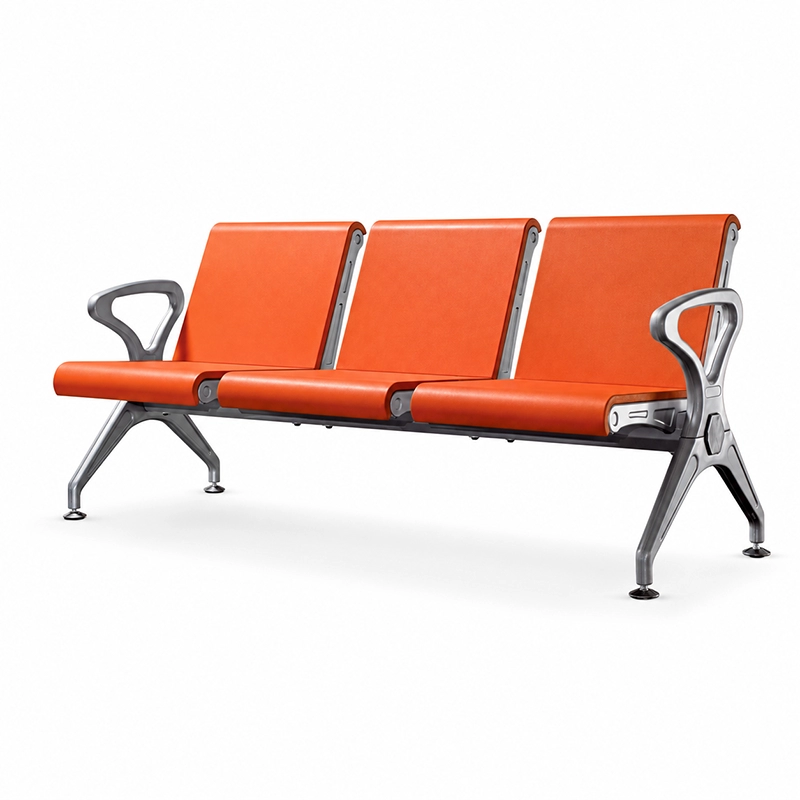
Healthcare seating answers to a stricter brief than any other public seating category. It has to be hygienic enough for infection-control protocols, comfortable enough for patients who may be elderly, frail or in pain, and tough enough to survive continuous cleaning with aggressive disinfectants. This guide covers the two most-specified types: hospital waiting chairs and infusion (IV) chairs.
1. Why Integral-Skin PU Suits Healthcare
The dominant material in modern outpatient seating is self-skinning polyurethane. The moulded integral skin has no fabric surface, no open seams and no exposed foam, which means:
- Surfaces can be wiped with alcohol, chlorine and quaternary-ammonium disinfectants.
- Body fluids do not soak into the seat.
- There are no crevices for dust and pathogens to accumulate.
- The shell can be moulded with a contoured lumbar curve and a gently sloped pan.
Where upholstery is preferred for the waiting area's appearance, specify a fluid-resistant, wipeable cover rather than a woven fabric.
2. Hospital Waiting Chairs: What to Look For
- Row configuration: 2 to 6 seats per beam, with dividing armrests to keep patients in defined seats and to assist standing.
- Seat height and depth: around 430-450 mm seat height and a slightly shallower pan make it easier for shorter and older patients to sit and rise.
- Armrests on every seat for support, particularly in geriatric and rehabilitation departments.
- Beam and legs: closed-profile steel with a fully welded leg bracket - healthcare cleaning crews work fast and corners take the impact.
- No fabric gussets or gaps that a mop cannot reach.
3. Infusion Chairs: Getting the Details Right
IV chairs combine a waiting seat with a support for an infusion stand and, often, an accompanying seat for a companion. Points to confirm:
- Pole accommodation: whether the chair accepts a dedicated IV pole holder integrated into the beam or frame, or a standard pole weight base beside the seat.
- Recline or fixed: fixed-back chairs are the norm for outpatient infusion; reclining versions suit longer treatments.
- Companion seating: a side chair with the same seat height so a family member can sit level with the patient.
- Reach distance: the IV pole should sit within the patient's arm reach, and the bag should stay above shoulder height when seated.
4. Layout and Capacity Planning
Plan for 600-700 mm per seat pitch in general waiting areas to allow wheelchairs and walking frames to pass, and reserve a clear bay for wheelchair users that does not block the circulation route. A common approach is roughly 1 wheelchair-accessible bay for every 20 standard seats.
5. Procurement Checklist
- Written confirmation of the disinfectant compatibility of the seat surface.
- PU density and skin thickness; seat load rating (150 kg or above is a reasonable floor).
- Fire performance certificates for the foam where required.
- Colour and finish range that fits healthcare interiors - light, neutral tones are easier to inspect for cleanliness.
- OEM/ODM availability on seat count, armrest style, IV pole integration and logo printing.
Shengke Rui Furniture has manufactured public seating since 1984, including hospital waiting chairs and infusion chairs in self-skinning PU on steel, stainless steel and aluminum beams. We support full OEM/ODM customisation and supply healthcare, transit and institutional projects worldwide. Contact us for specifications, drawings and samples.