
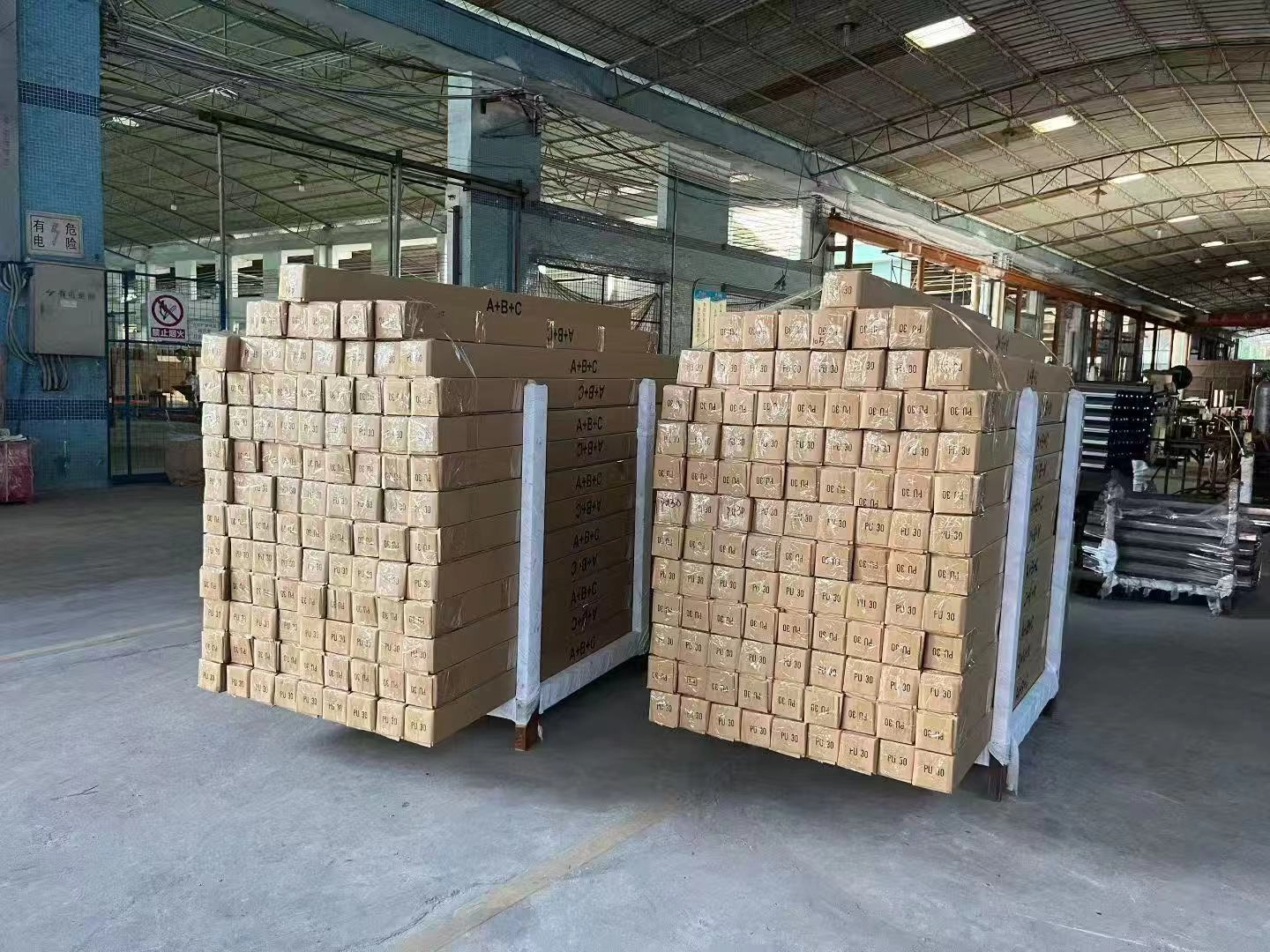
A custom public seating order moves through a predictable sequence of steps, and the delays that buyers run into usually come from one of them being skipped rather than from production itself. On row seating there is an extra step that most furniture categories do not have - mould development - and it is usually the longest item in the schedule. This guide walks a custom or OEM/ODM seating project from the first enquiry to the loaded container, and lists what to send at each stage.
1. Step 1 - The Brief
The enquiry is where cost and lead time are set, because everything downstream is measured against it. Send drawings, specifications, materials and quantities together with the information needed to quote: the application and environment, the seat count per bay, the finish and cleaning regime, and whether the row must be anchored. If the site has a fixed delivery window or a nominated port, say so at this stage, because the terms of sale change both the price and the shipping plan.
2. Step 2 - Design and Mould Development
For anything outside the existing range, the design step comes before production planning. A new PU seat shell or a new leg component has to be developed as a mould, and the mould is the long-lead item: it must be built and proven before the first saleable seat can be foamed. Our production line covers product design and mould development in-house, which keeps that step inside the same schedule as the rest of the order rather than split across suppliers.
If the requirement can be met from an existing series, this step collapses into a specification review and no tooling is involved - which is the single biggest difference between an ODM order and a fully custom one.
3. Step 3 - Sampling and Approval
Approve a sample before any production run. On a seat, the sample confirms the shell shape and contour, the skin quality of the foam, the colour, the armrest and leg fit, and the beam assembly. Approve it in writing and reference it in the order, so that the sample and the production run are judged against the same definition. This is also the point to confirm any add-on - an infusion pole holder, a companion seat, a writing tablet or a power module - because those change the frame rather than the seat and are much cheaper to correct before tooling is finalised - see infusion chair details.
4. Step 4 - Foaming, Hardware and Assembly
Production runs the sequence the material demands. PU cushions are formed by one-time foaming in the mould from eco-friendly Type A and Type B polyether, which produces the natural self-skin surface and the combination of a tough exterior with a soft interior - the material comparison is in public row chairs explained. The shell then meets the steelwork: beams cut and finished, leg brackets welded, armrests and dividers fitted, and the row assembled before packing.
Two things are worth fixing at order stage rather than mid-production. One is the finishing of the metalwork, which is a separate process step with its own batching. The other is the accessory set - the fixings, the pole holders and the small parts - because a row that arrives without its fixing kit stops the installation just as effectively as a missing seat.
5. Step 5 - Inspection and Documentation
Inspection covers the dimensional accuracy of the beam and leg positions, the skin integrity and colour match of the foam, the fit of the armrests, and the appearance of the finished assembly. Where a project requires it, the written evidence should be prepared alongside the shipment rather than chased after it: foam density and load rating figures, confirmation of the seat surface's compatibility with the disinfectants the facility uses, and fire performance certificates for the foam where the authority requires them.
PDF manuals and operation videos are available for each product, which is worth requesting at order stage on custom items, where the assembly method is not already familiar to the site team.
6. Step 6 - Packing and Loading
Packing is specified rather than assumed. Neutral packaging and custom logo packaging are both available, and bundle sizes, label content and the way beams are separated from seat shells can be set to suit a site delivery or a distributor warehouse. Row seating is bulky and relatively light, so the loaded volume is worth checking against the quotation - a well-nested load can make a measurable difference to how many rows travel in a container, and it also limits the handling damage that comes from loose metalwork in transit.
7. Step 7 - Terms, Ports and Payment
Terms should be agreed before the final price is issued. We support various Incoterms, and the main loading ports are Foshan, Guangzhou and Shenzhen - all within reach of the production base, which keeps inland freight short. Payment is normally arranged by T/T, L/C, PayPal or Alibaba Trade Assurance, and the choice is usually settled at the same time as the Incoterm, because the two together define who carries the risk on the water.
8. Procurement Checklist
- Send drawings or specifications with materials, quantities and seat count per bay.
- State the application, environment and cleaning regime, because they decide the finish and the leg material.
- Confirm whether existing tooling can be used or a mould must be developed.
- Approve a sample in writing before the production run is scheduled.
- Confirm add-ons and the accessory set at frame design stage.
- Ask for the documentation you need - density and load figures, cleaners compatibility, foam fire performance.
- Specify packing and labelling rather than accepting a default.
- Agree the Incoterm, port and payment method before the final price.
How the factory is set up - lines, series and location - is covered on our about page, and we welcome project visits to the Guangdong facility.
Shengke Rui Furniture has manufactured public seating since 1984, with a complete independent production line covering product design, mould development, production and packaging - including self-skinning PU seats foamed in special moulds and mounted on steel, stainless steel and aluminum alloy beams. We supply airport, hospital, transit and institutional projects worldwide and support full OEM/ODM customisation. Contact us with your drawings and quantities to start a project.